Burton on Broadway
(Tuesday August 18th 1964)
An interview in New York with Richard Burton by Quentin Reynolds, directed by TWW's Terence de Lacey.
Conversation ranged from his reaction to playing a modern version Hamlet, to, inevitably, his romance with Elizabeth Taylor
The Cider Apple (from May 6th 1966), a half hour series of "folk songs, sea shanties and cheerful choruses." The setting was a typical quayside pub, specially built in the Bristol studios. Producer Derek Clark said, "the West Country has always been rich in folk songs." The host was Steve Benbow, and behind the bar was Judy Kenny. Regular guests were Chas McDevitt and Shirley Douglas, with Billy Burden. Guests on the first show were The Crofters, Tommy Reilly, Adge Cutler, and Shirley Collins.
Claim to Fame
- A series hosted by Guy Thomas. On February 9th 1967 at 10.10pm, the guest challenger was Peter Reynolds, film star. Trying to guess his more unusual claim to fame were panellists Olive Stephens, Caroline Lloyd, and Iain Crawford. Earlier in the month Peter had discussed his film career on TWW Reports
The Crowded Years (Fridays, 1960) was a series of film clips showing life between the two world wars. The link man was Bruce Lewis, director Mike Towers. The first in the series on April 8th 1960 was titled Landmarks, and included an interview with George Bernard Shaw.
Dylan Thomas- a 30 minute 1961 documentary film directed by Jack Howells, narrated by Richard Burton. It won an award in 1963 for the best Documentary Short
Exclusive (March 1965) going behind news stories, host Daniel Farson. "The theme of Exclusive will be to present the personalities behind the news events in the TWW area and to analyse any happenings which set people talking." Devised by Michael Towers and Wyn Roberts. This periodic programme had begun in TWW's early days.
For their first year, unlike most other regions, TWW avoided a lunchtime show, but at 1pm on Friday March 20th 1959 they followed the trend with an hour-long
Friday Special hosted by Rex Garner and Maureen Pryor, who left after May 15th, replaced by announcer Rita Street.
19 year old singer Maureen Evans was such a success that TWW put her under contract. Also a regular on the programme was Ted Trimmer, brother of actress Deborah Kerr, who presented film reports on diverse subjects such as ghost hunting in Monmouth
and an inventor in Weston-super-Mare.
TWW director Don Leaver stated it was "in the main light, informative with serious interludes. We shall not forget that there will be many men looking in, some in factory canteens and others relaxing at home before the afternoon shift." Programme editor was Michael Frostick.
Hecklers Halfhour appeared during the run up to the 1959 General Election- more details needed.
Some big names were featured in Holiday Mood in 1965. This was an outside broadcast series from the Gaiety Theatre at Butlin's Minehead. Alan Taylor was compere. The first show on August 27th included Jill Day, who also starred on September 3rd. Janie Marden starred on Sept 10th and 17th while top of the bill on Sept 24th and Oct 1st were Flanagan and Allen (this would have positively been their last tv appearance together). Regulars were comedian Freddie Sales, dancers Lynton Boys, tenor John Melvor, Tery and Toni Calder dancers, singer Suzanne Parsons, as well as the Marie de Vere Girls. A separate notice stated that camp impersonator Janet Brown also appeared
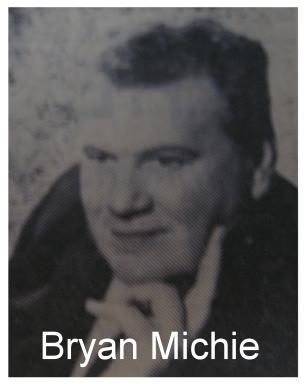
One local programme that introduced some well known names was In Your View. First host was Bryan Michie, Hugh Griffith took the reins on the December 17th 1958, Harold Lawson hosted until in January 1959 Dennis Vance took over the chair. Ted Willis was guest on Dec 30th 1958. Frankie Howerd starred on Tuesday January 13th 1959. Dilys Powell and Donald Houston appeared on February 24th 1959. From March 31st, the programme length was extended to 30 minutes, in this programme Dennis Vance was joined by Ted Willis and Sir Alan Herbert. The line-up on May 12th was Dilys Powell, Lord Birkett, and Sir Alan Herbert, on May 19th Harold Lawson, Ted Willis and Nancy Spain. Other guests who appeared included Lord Altrincham and Lady Violet Bonham-Carter. The programme was shown in a slot at 6.40pm, but moved to a late night slot of 10.45pm in January 1959. This coincided with an improvement,
a critic claimed, "with the panel discussing viewers' letters reduced from four to two," with the net result that "the discussions have been growing steadily more stimulating." Another wrote, "this is one of the few late night programmes which practically compel you to keep watching." The series finished its run at the end of May that year. In the summer of 1959 it was revamped as 'Challenge' (qv). However the similarly titled Your Point of View was screened in the autumn of 1962, hosted by George Scott who had also run Challenge earlier that year. For half an hour he discussed viewers' letters with his guests, and you were encouraged to write because three guineas was paid for any letter used.
Journey into Spain with Bob Danvers Walker, focussed on traditional tourist spectacles like bull fighting, plus a look inside Salvador Dali's home. "We have gone into the little places of Spain," Bob explained. The programme was shown on November 30th 1959
Late Date - four shows starting on Thurs Nov 26th 1959 with Dave Lee and His Trio playing the top tunes of Richard Rodgers. On Dec 3rd Spanish harpist Marisa Robles was featured. Dec 10th: Dave Lee with the music of Noel Coward. Dec 17th: Chas McDevitt and Shirley Douglas. The series was networked to STV, Southern, Anglia and Tyne Tees
Life Begins at 80 (first programme Nov 23rd 1959) was a show based on an American format to which Bryan Michie bought the rights, and he turned it into what he believed was entertainment, "I am convinced that a series featuring octogenarians will be of great interest and entertainment value in the region."
Critic Alec McKinty said "the programme invariably proves well worth watching- due to a great extent to the bluff, friendly manner of Bryan Michie as chairman.... Michie never allows the proceedings to sag into any sort of reminiscent monologue, he keeps things going with the pally remark or joke, accompanied by a deep and hearty guffaw."
Among the many on later shows were Harry Levaine, Tom Crawford and Gilbert Gordon.
Veteran star of the halls, Ada Reeve became a regular, saying, "the thrill of being in the TV show is just the same for me as was appearing on the stage as far back as 1879. I never get tired of it." To prove the power of tv, Ada added that "fully 100 people have stopped me in the street to shake my hand since I have been on the programme. It's wonderful."
Another music hall star to appear was Albert Whelan in July 1960 in a show recorded in the Town Hall Bridgwater.
Such success lead to the series being transmitted also in London and The Midlands.
Looking for a King
was shown on Sunday December 20th 1964.
It was a modern interpretation of the Old Testament story of Daniel. It was networked to Westward and Anglia. It was a thirty minute operetta, The Daniel Jazz
Making Room at the Top
(Wed Feb 20th 1963, 9.45-10.30pm)
- This non networked documentary was about the problems associated with university expansion. In particular, the ten million pound investment in Bristol University, enabling student growth to double in seven years.
Melody Time (1959)-
on Tuesday May 5th and for the following two weeks, the music of Julian Slade was featured, with the composer himself at the piano, as well as Margaret Tudor Evans. The songs were sung in the first programme by Eleanor Drew, Ray Parks, and Angus McKay. Some songs were from Slade's show Christmas in King Street. May 12th was devoted to his best known Salad Days, and included singer Jane Wenham. The May 19th show had music from Free As Air.
Nye! an hour long documentary on Aneurin Bevan, written and directed by Jack Howells, shown on March 1st 1965, then networked on July 7th 1965.
It won the Television Production of the Year, as well as Best Documentary Award.
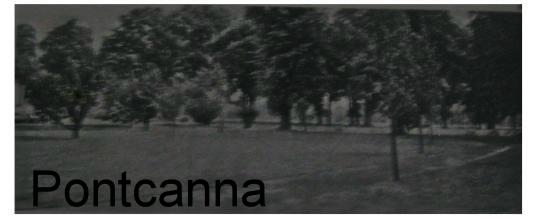
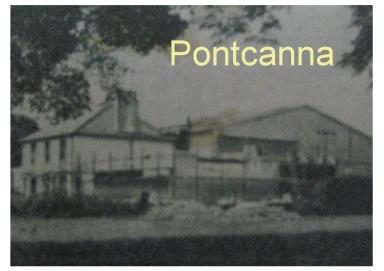
Pegasus Overland was an occasional programme that began on December 3rd 1959, filming eight territorial Army men setting off on a world tour to Australia that began from TWW's Pontcanna Studios.
I cannot find information if they made it, but they planned to be in Teheran by Christmas. "The journey will take them through every variety of terrain- jungle, desert, plain, swamp and over mountainous land. Their jobs range from botanist to window cleaner."
Personal Scrapbook in 1963 featured interviews by Sir David Llewelyn with successful personalities. Among the guests were Kenneth More, Freddie Trueman, the Duke of Bedford, Graham Hill, Sir Gerald Kelly, Boris Karloff, Stephen Potter, and Naomi Jacob. Irish Television bought up the series
Police Five- TWW's regional version was first screened on Wednesday June 5th 1963 at 8.55pm
Presenting Maurice Woodruff began on Wednesday January 10th 1962 at 8pm. The famous clairvoyant talked to local people about themselves and their personal problems... "He will forecast future events for viewers and for members of the studio audience."
Soapbox (1958). Host was Simon Kester, though Wally Reyburn took over from Oct 27th, at which time a bonus of £15 was paid to the best speaker on the programme. First director was Jeff Inman. This series ended on January 5th 1959, the final programme included John Baker, Joy Owen, Ronald Delderfield as well as Wally Reyburn.
Rex Garner was one of the panel of "hecklers" during the run.
Stan At Ease (autumn 1966) gave Stan Stennett a tv series of his own for the very first time. Six shows were made in Bristol, produced by Douglas Clark. Rehearsals began on July 18th, with the first telerecording on Wed Aug 31st. Transmission of the first series ended on Nov 18th 1966. Each show had a guest star, but, explained Stan, "the basic idea will be to introduce young talent, four youngsters under the age of 15 in each show." A report added, "if it is a success it is likely to be networked." Well, the second series starting Tuesday January 10th 1957 at 7pm, was also shown in the Grampian area on Sundays, which suggests that it was videotaped.
Producer: Derek Clark.In both series, Stan was assisted by Kris Ken and Bob Giles. Music: Jerry Allen Trio.
Auditions took place in Bristol, Swindon, Taunton, Cardiff, Swansea and Barry. Over 1,000 young hopefuls auditioned for the first series.
Summer Serenade (Wednesday August 10th 1960). Alec McKinty described it, "without doubt TWW's new series... is the quietest, the most pleasant, soothing and entertaining they have yet produced." He described this first programme as having "a relaxed, engaging atmosphere with Bach and Grieg ... rubbing shoulders with the more popular compositions.
There's a great chance here for TWW to prove that they can put on a classical-popular series in the Eric Robinson idiom... Joseph Cooper... compered and played the piano, He made a good job of both. With but a small orchestra Norman Whitehead backed him, and the other artists, with satisfactory skill.
Laurence Payne appeared, looking as much like Kirk Douglas on screen as he does on stage. Louise Parker's singing became a bit squeaky here and there. But all in all, the whole programme was well produced and performed"
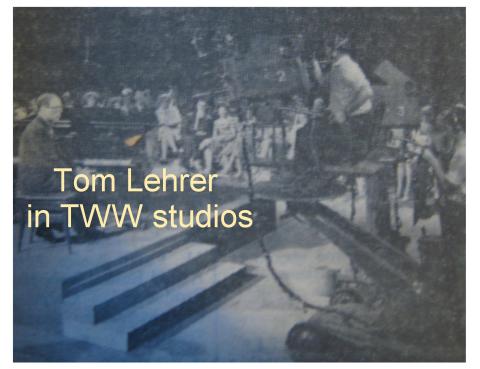
Time (Wasted) with Tom Lehrer was a series of three 15 minute shows made at TWW's Pontcanna Studios on July 7th 1960. In just six hours, Tom had discussed rehearsed and recorded 45 minutes of songs. A TWW offical stated, "certainly not the lukewarm variety- they're the sort which have aroused controversy." I don't have any transmission dates but TWW had planned to screen them during October that year. It is good to note that the soundtracks have survived. In fact the tapes must have survived for a while, since STV was screening the series in May 1961
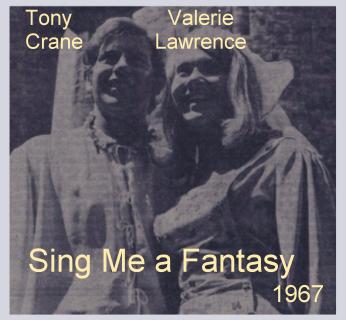
The Tony Crane Show (TWW, Christmas Day 1967)
Singer Tony Crane appeared in his own show, a half hour light entertainment with Tony singing romantic, light-hearted, and swinging numbers. Guest star was Stubby Kaye with support from the Malcolm Goddard Dancers, Bob Miller and the Millermen and singer Rosanella. The show was not networked
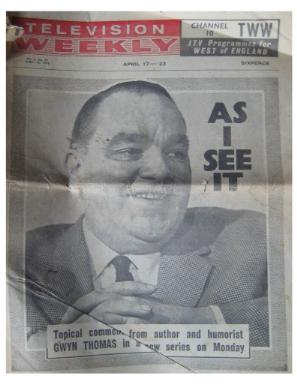
Venice- The Drowning City (1965) was a 30 minute film in which Gwyn Thomas took a gondola trip around the city. As well as a TWW screening, this was also shown on Ulster (Mar 2nd 1965, 11.17pm), Tyne Tees (Mar 12th 1965) and Border (Mar 26th 1965. 10.37pm)
Voices of Wales (1965) a half hour show introduced by Donald Houston and featuring the Welsh National Opera Company and South Wales choirs. It won the local Best Entertainment Award in 1965
Wales and the West (1962)
- John Betjamin visited West of England towns, while Gwyn Thomas went to South Wales, commenting on what they find. Programmes included trips to Bath, Swindon, Sidmouth, Ebbw Vale, and Laugharne. Director: Jonathan Stedall. Producer: Douglas Henry. For some reason, in October 1962, Lord Snowden was shown privately a selection of these programmes, when he visited TWW's London offices.
Yer 'Tiz (1958 Mondays) - compere Brian Vesey Fitzgerald, director Jeff Inman. One unusual feature was a four minute "news ballet," based on a current news story, interpreted in dance and mime. Dancers were taken from the Western Theatre Ballet, artistic director Peter Darrell
TWW programmes
.
.
.
.
.
.
.
 Initial Set backs
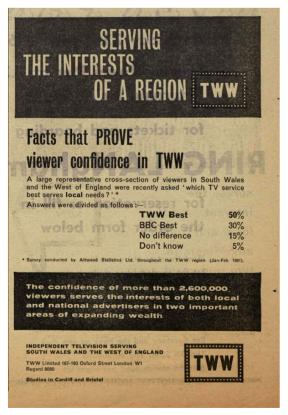
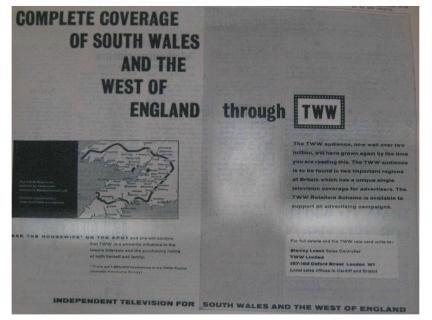
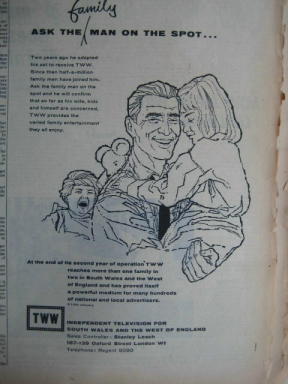 A selection of TWW trade advertisements issued in 1960
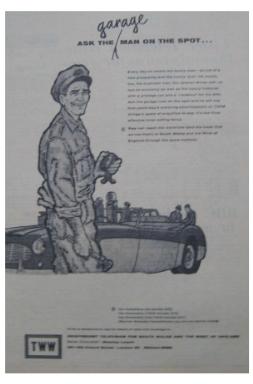
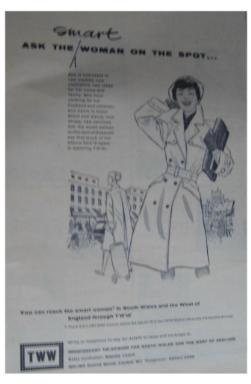
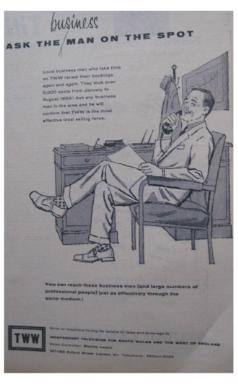 Last of the 1960 TWW trade ads
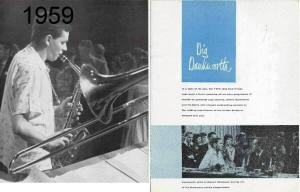 Jazz Club
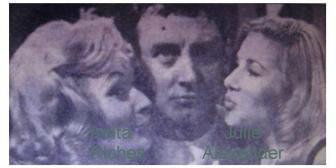 Vice Versa (1961) a comedy quiz series with Spike Milligan as questionmaster. Viewers attempted to win cash prizes of up to £50, but as you might expect the emphasis was on the unusual, "everything in the show is back to front or topsy turvy or plain zany," a spokesman stated.
Assisting Spike was hostess 22 year old Julie Alexander, and Australian Anita Riches was the scorekeeper. They were aided and abetted by a musical act The Alberts, as well as Bob Todd
Vice Versa (1961) a comedy quiz series with Spike Milligan as questionmaster. Viewers attempted to win cash prizes of up to £50, but as you might expect the emphasis was on the unusual, "everything in the show is back to front or topsy turvy or plain zany," a spokesman stated.
Assisting Spike was hostess 22 year old Julie Alexander, and Australian Anita Riches was the scorekeeper. They were aided and abetted by a musical act The Alberts, as well as Bob Todd
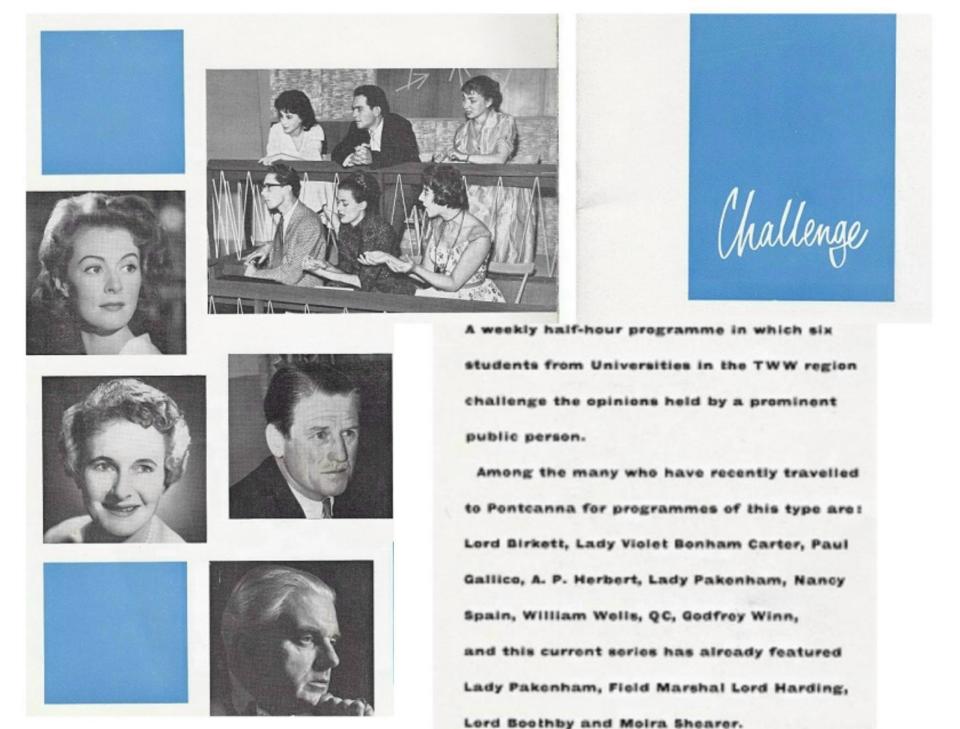 Challenge (from 1959)
 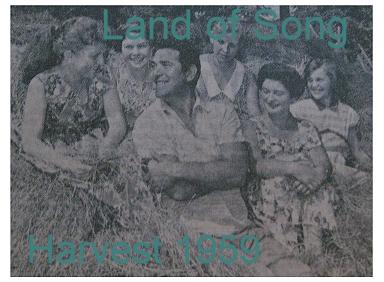 Land of Song (Gwlad y Gān)
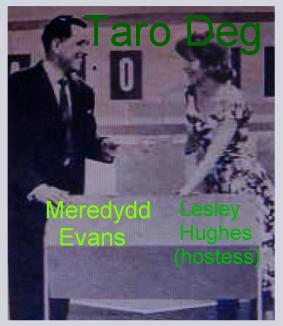
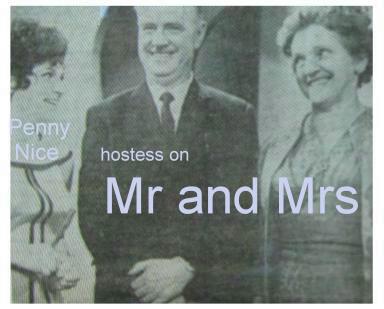 Mr and Mrs
 TWW Triumphs Over Set Backs
 Some TWW programme schedules